
Oklahoma City Bench Warrants
Oklahoma City bench warrants come from two court systems that serve the metro area. The Oklahoma City Municipal Court at 701 Couch Drive handles city code and traffic cases, while the Oklahoma County District Court covers felony and misdemeanor charges at the county level. Both courts issue bench warrants when a person fails to show up for a scheduled hearing or does not pay court fines on time. You can search for active bench warrants in Oklahoma City through online tools that cover municipal and county records. The city also runs a Warrant Office where staff can look up open cases and help people work toward clearing them.
Oklahoma City Overview
Oklahoma City Municipal Court Warrants
The Oklahoma City Municipal Court sits at 701 Couch Drive in downtown Oklahoma City. It is open Monday through Friday from 8:00 a.m. to 5:00 p.m. Customer service hours run a bit longer, from 7:30 a.m. to 5:30 p.m. The court handles traffic tickets, city ordinance cases, and code violations. When someone misses a court date or does not pay a fine, the judge can issue a bench warrant. Under Oklahoma Statutes Title 22 Section 454, a judge has the power to issue a bench warrant any time a person fails to appear after being told to show up. The phone number for the court is (405) 297-3898.
Oklahoma City Municipal Court bench warrants work a bit different from county warrants. These warrants stay in the city system. They do not show up on OSCN or ODCR. You have to check with the court itself or use the city's own search tool. The Warrant Office at the court can look up any open bench warrant tied to your name. Staff there can also walk you through options for clearing it. That might mean setting a new court date, starting a payment plan, or taking part in one of the city's penalty reduction programs that run from time to time.
The screenshot below shows the Oklahoma City Municipal Court page where you can find details about bench warrants and court services.
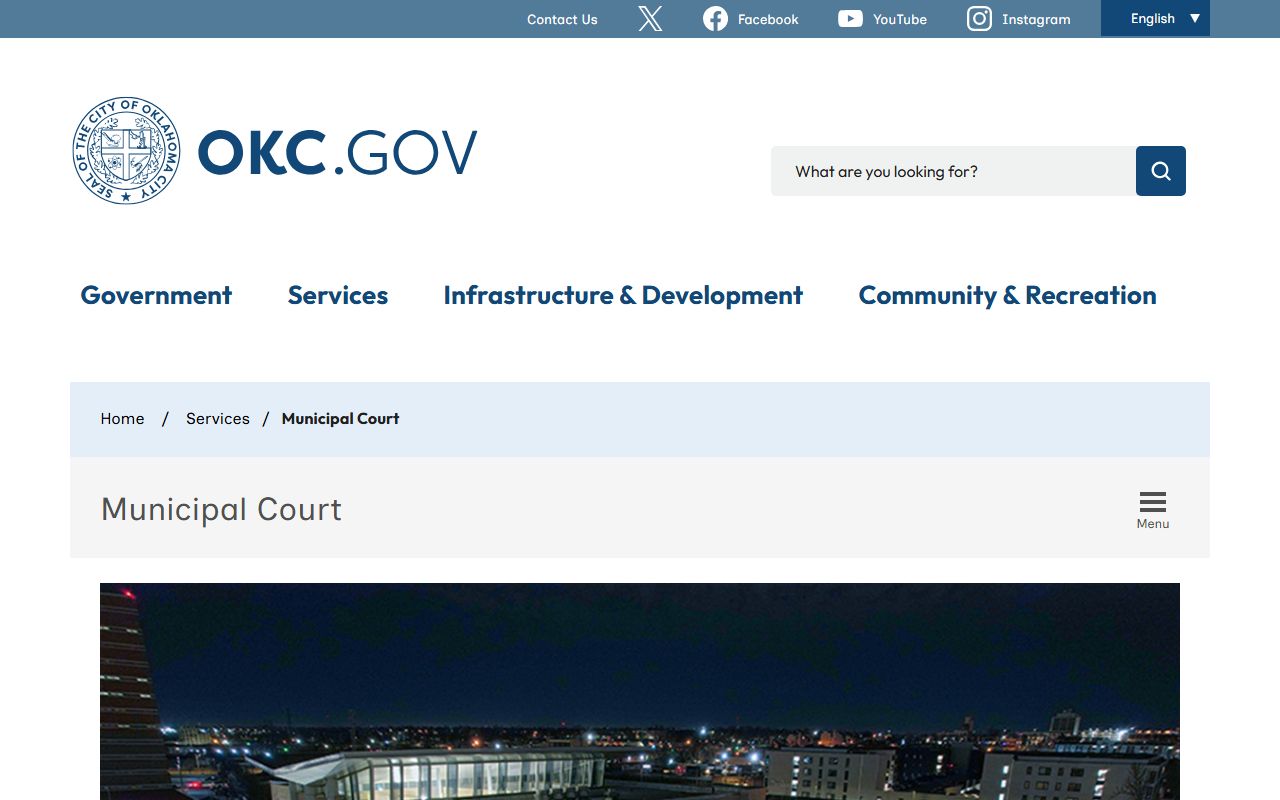
This court page has links to forms, payment options, and contact info for the Warrant Office.
How to Search for Bench Warrants
For municipal bench warrants in Oklahoma City, the Municipal Records Search tool lets you look up cases online. You can search by last name, first name, date of birth, driver's license number, citation number, docket number, warrant number, or plate number. The tool is free to use. It pulls from the Oklahoma City Municipal Court database. Results show case status, charges, and whether a bench warrant has been issued.
For county-level bench warrants in the Oklahoma City area, use OSCN to search Oklahoma County District Court records. Pick Oklahoma from the county dropdown and type in a name. OSCN shows all case types including felonies, misdemeanors, and traffic cases filed at the county level. If a bench warrant was issued on a case, the docket entries will note the date and reason. You can also try ODCR as a second source for court records that may not show on OSCN yet.
The Oklahoma County Sheriff's Office keeps its own warrant database. This office handles service of bench warrants for Oklahoma County cases. You can contact them to ask about outstanding warrants. The sheriff also runs warrant clearing events from time to time. Call 405-713-1550 for info on the next one.
Below is the Oklahoma City warrant information page that explains the process for resolving outstanding bench warrants.
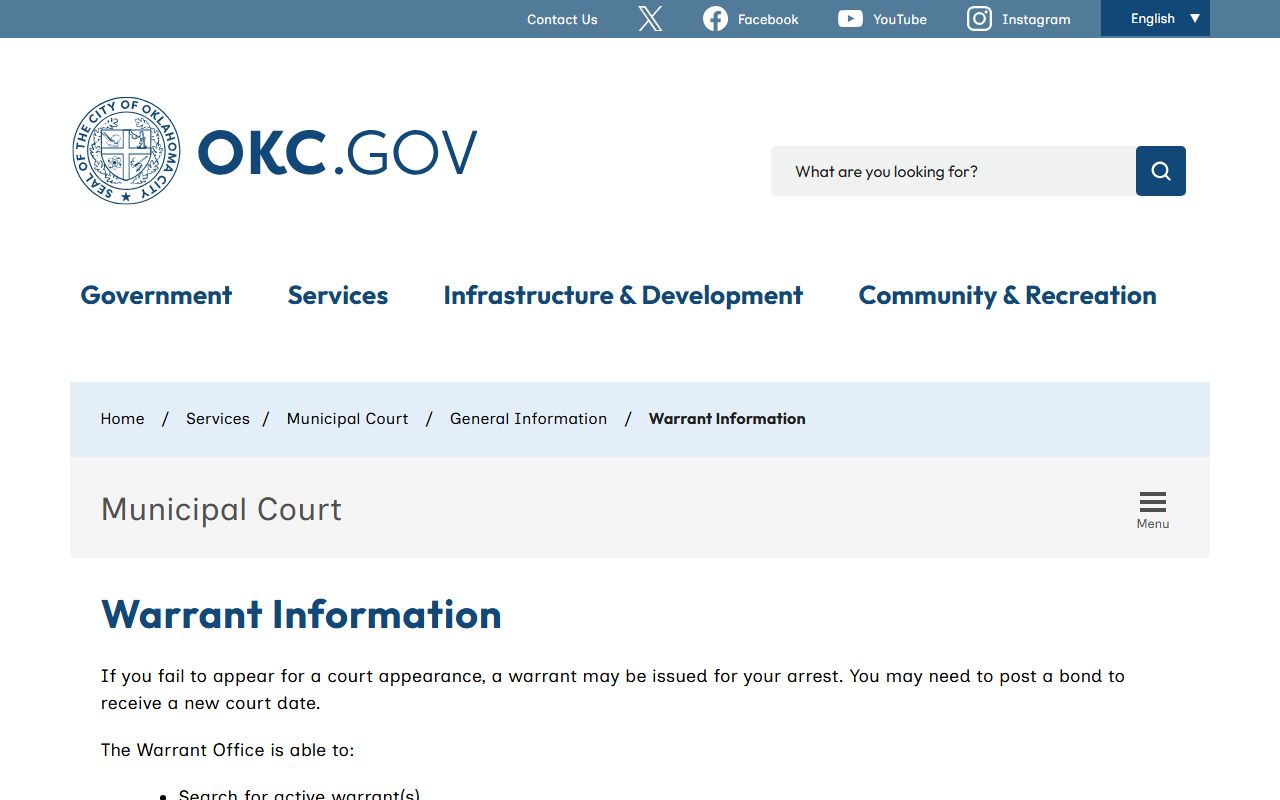
The warrant info page covers what to do if you think you have an active bench warrant in Oklahoma City.
Note: Municipal bench warrants in Oklahoma City do not appear on OSCN, so always check the city's own search tool as well.
Bench Warrant Consequences
A bench warrant in Oklahoma City means police can arrest you at any point. During a traffic stop, at home, or while you are out running errands. The Oklahoma City Police Department checks for warrants during routine stops. Under Title 22 Section 460, a bench warrant can be served in any county in Oklahoma. So even if you leave Oklahoma City, the warrant follows you across the state.
Missing court comes with extra legal risk. Under 59 O.S. Section 1335, willful failure to appear is a separate crime. If the original charge was a felony and you were out on bond, the failure to show up after 30 days becomes its own felony. The fine can reach $5,000 and prison time up to two years. For misdemeanor cases, the penalties are less harsh but still real. The court can raise your bond, take away your own recognizance status, and add new fines on top of what you already owed.
Your driver's license is at risk too. Under 22 O.S. Section 1115.5, the court can report your failure to appear to the Oklahoma Department of Public Safety, which then suspends your license. Getting it back means clearing the bench warrant first and then paying a reinstatement fee.
Clearing Oklahoma City Bench Warrants
You have several options for dealing with an active bench warrant in Oklahoma City. The best path depends on whether it is a municipal warrant or a county warrant. For municipal bench warrants, contact the Oklahoma City Municipal Court Warrant Office at (405) 297-3898. Staff can tell you what the warrant is for and help you set up a time to come in. The court runs penalty reduction programs that can cut down what you owe.
For county bench warrants, you or your lawyer can file a motion to recall the warrant with the Oklahoma County District Court. The judge will set a new hearing date. Showing up and taking care of the case is what the court wants to see. Having a lawyer appear on your behalf is possible in many situations. The Oklahoma County warrant clearing events are another option. These events happen a few times a year and let people come in to resolve warrants without the risk of arrest on the spot. Call 405-713-1550 for details.
Steps that help when clearing a bench warrant in Oklahoma City:
- Search your name on the municipal records search and OSCN to confirm the warrant
- Write down the case number and court that issued it
- Call the court clerk or Warrant Office to ask about your options
- Talk to a lawyer if the case involves felony charges
- Show up on time for any new court date the judge sets
Note: Scammers have called people from numbers that look like the Oklahoma City Municipal Court line demanding payment over the phone.
Bench Warrants and Law Enforcement
The Oklahoma City Police Department handles service of municipal bench warrants within city limits. Officers can make an arrest at any time once a bench warrant is in the system. The Oklahoma County Sheriff serves county-level bench warrants. Under Title 22 Section 455, a bench warrant can go into one or more counties at once, and Section 968 says it gets served the same way as a standard arrest warrant.
The screenshot below shows the Oklahoma City Police Department page, which is one of the agencies that serves bench warrants in the area.
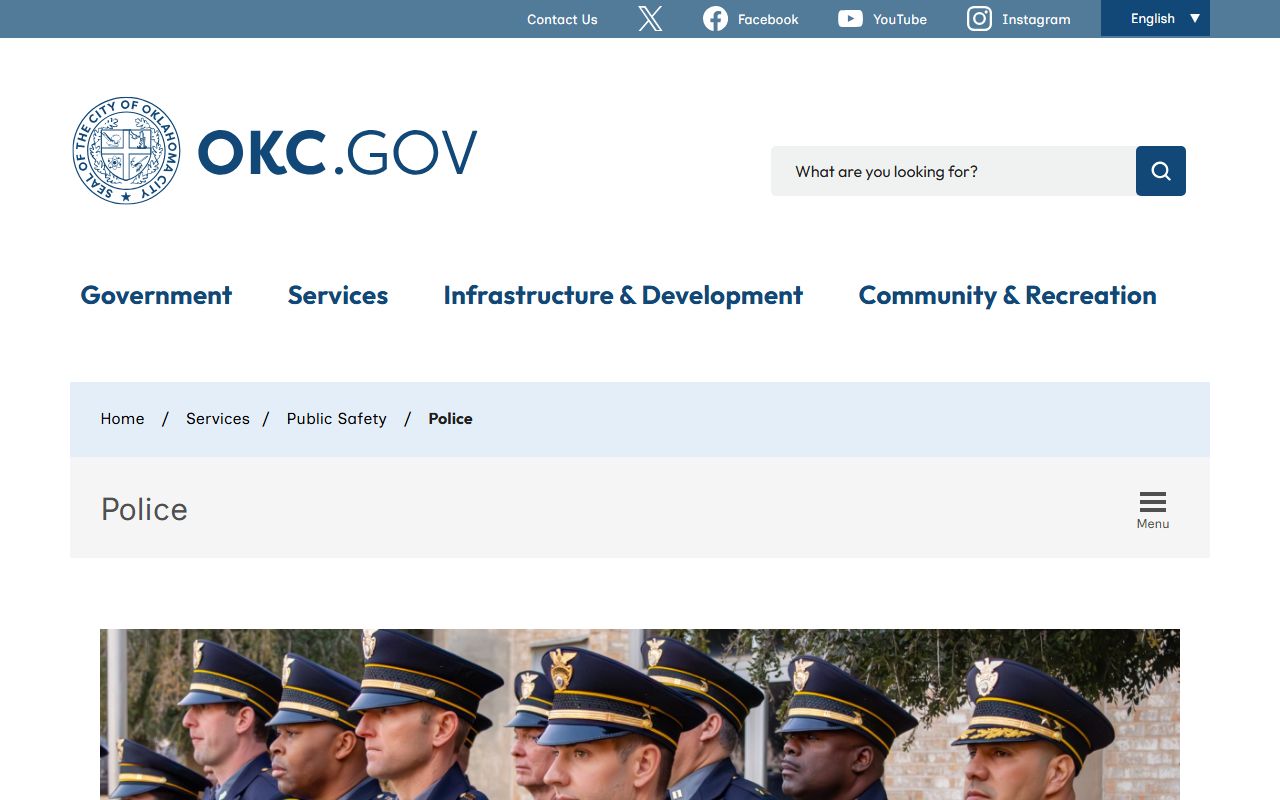
OKCPD officers check for active bench warrants during routine traffic stops and calls for service.
You can also check the OSBI CHIRP portal for criminal history records that may include bench warrant information. A name search costs $15 through the state bureau. The VINE notification system tracks custody changes if someone with a bench warrant gets picked up by law enforcement in Oklahoma City or anywhere else in the state. Both tools cover records beyond just the municipal court level.
Nearby Cities
Oklahoma City sits in Oklahoma County, which also covers several smaller cities in the metro area. Bench warrants from the Oklahoma County District Court can apply to cases from any of these places. Nearby cities like Moore, Midwest City, Yukon, and Mustang each have their own municipal courts too. If you are looking for bench warrants in those cities, check with their local court as well as the county system.
Other cities with bench warrant pages on this site include Edmond and Norman. Edmond is also in Oklahoma County. Norman is in Cleveland County, just south of Oklahoma City. Both cities have their own municipal courts that issue bench warrants for local cases. Under Oklahoma's Open Records Act, Title 51 Section 24A.1, warrant records are generally public and you can request them from any of these courts.